Obituary Paul B. Larsen
Paul B. Larsen (1931–2025)
Paul Larsen’s death at home on Bainbridge Island in Puget Sound opposite Seattle on May 26, 2025 brings to an end a significant and distinguished career in both academe and government. Before retirement he had served simultaneously as a Senior Attorney in the Office of General Counsel, United States Department of Transportation, and Adjunct Professor of Law, Georgetown University Law Center in Washington D.C.
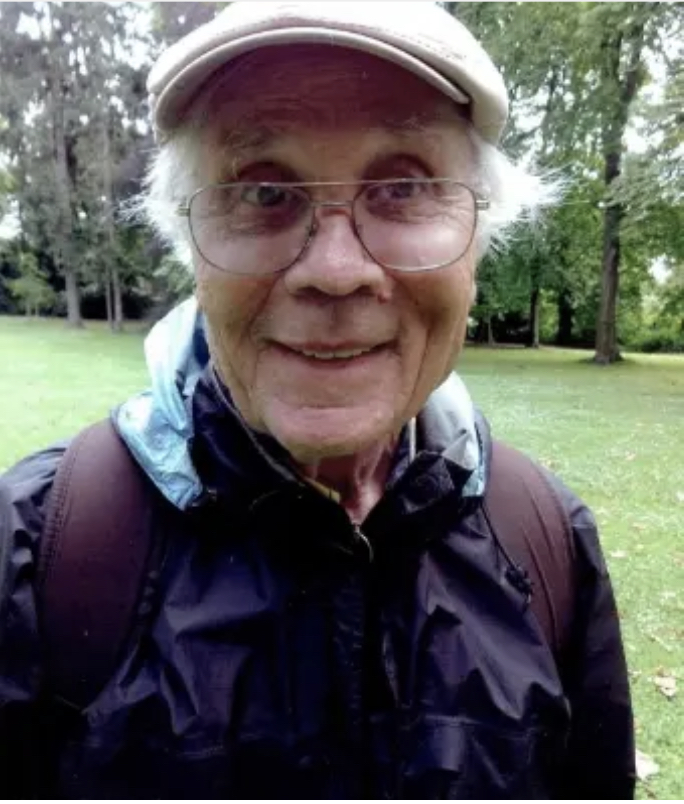
Paul was born in Denmark and grew up during the German occupation, an experience that left an enduring mark. However, in 1954 he emigrated to the United States, and served for a period with the US Army in Germany after the Second world war following which he entered tertiary education.
We met at McGill University in Montreal as the 1963–4 intake to the Institute of Air and Space Law gathered. He already had an A.B. degree from Wilmington College, together with law degrees from the University of Cincinnati, and New York University. Whether in one of the aviation-related classes or in Ivan Vlasic’s space law class he contributed with daunting knowledge and insight. The format at McGill was that an LL.M. required attendance for an academic year followed by a thesis. We graduated LL.M. in 1965.
After McGill Paul, wife Judith, and daughters Astrid and Heidi went for a period to the German Institut fur Luftrecht and Weltraumrechtsfragen in Cologne Air Law Institute in Cologne, where he conducted research under the guidance of Professor Alex Meyer. In 1966, while he was engaged in space law research at Yale University, Paul was offered a teaching position at the Southern Methodist University Law School. At that point SMU had decided to establish a US centre for air law education. Paul’s role was therefore also associated with working with the student editors editing the Journal of Air Law and Commerce to promote that objective. As it happened in 1965 the US had denounced the Warsaw Convention and the question of compensation for aviation accident was under vigorous international discussion. Thanks to Paul’s background and contacts a series of symposia was organised, much to the benefit of aviation law, as can be seen in ‘Air Law Education 1967–91’ (1991) 56 JALC 705. SMU continues to hold important annual symposia on a variety of aviation or space law topics thanks to the initial initiative.
In 1970 Paul entered government service as an attorney in the US Department of Transportation and in 1972 was appointed to an adjunct position in Georgetown University Law Center to teach space law. He served on many US delegations that dealt with aviation and space, as well as contributing to the work of UNIDROIT and other non-governmental bodies.
Paul’s authorial contributions over the years have been many. HeinOnline lists 75 articles. That list is not by any means exhaustive of his output but its range across many areas of aviation and space law demonstrates an informed and innovative mind. The earliest article listed, on the US/France air traffic rights arbitration, was published by the JALC in 1964, with articles on space in the Proceedings of the International Institute of Space Law and in the Ohio State Law Journal both appearing in 1988. As to books, he co-edited two editions of Aviation Law: Cases, Laws and Related Sources (2006 and 2012) and Space Law: Cases and Materials (2007), and with myself co-authored Space Law: A Treatise, the third edition of which was published in 2024, with a Chinese translation to appear later this year.
Paul maintained contact with those he met professionally and always cared for the welfare and progress of former students. He was always curious, always humorous and interested in more than his own work. He liked music. When visiting him and Judith in Washington I often profited from their subscription to concerts in the Kennedy Center. Over the years through visits and correspondence we became close friends. We discussed world happenings. We discussed what was going on on both sides of the Atlantic in some detail. He was amused by the intricacies of the non-existence of the UK Constitution. He could not understand but accepted the UK exit from the EU. He could be trenchant about the US scene and the working of its Constitution.
Paul journeyed from childhood on a farm in Denmark, through the German occupation in World War 2, across the Atlantic to American citizenship, culminating in his law analysis of outer space. His hope was for humans to open the Beyond to peaceful exploration of the Universe.
Prof. Francis Lyall